
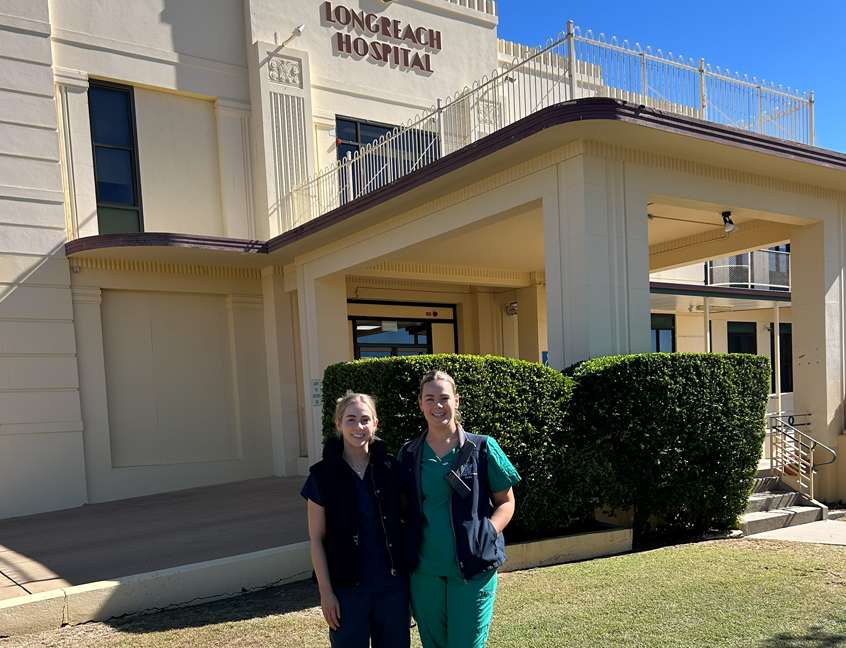
Growing up in a rural community inspires me to give back to regional and remote towns and contribute first-hand to improving vital health outcomes. I find returning to a community filled with my own support network incredibly satisfying and rewarding.
I recently returned to my hometown of Longreach in Central Queensland to undertake an Australian Primary Care Prevocational Program – Rural (APCPP – Rural) rotation. Being PGY2, this rural rotation was an incredible experience, and I participated in managing various presentations that would likely not occur as a junior in a metropolitan area.
I completed primary and secondary school in Longreach, supported by not only my family, but also many locals. There are rural generalists working here, who have known me since I was a child, encouraging and assisting me through the obstacles encountered in progressing through my career. Being mentored by doctors who were medical students when I was in high school, and who were my general practitioners growing up, is a unique experience and contributed to my desire to pursue rural medicine.
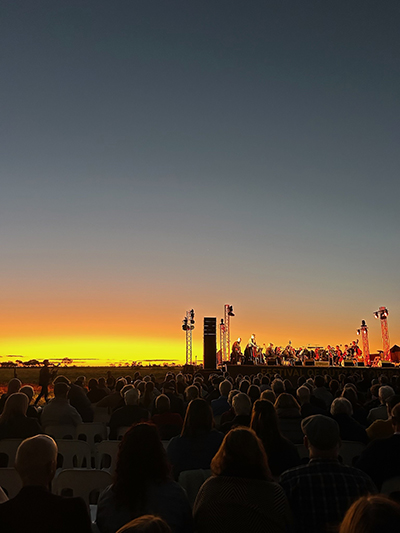
Rural communities not only provide vital clinical experiences; there’s also very strong social connections and ample opportunities to get to know new people. Without a doubt, there will always be events on! Within my ten-week term here, I attended 2 shows, 3 race meetings, a campdraft and many dinners with my health colleagues.
Another key benefit of my APCPP - Rural term was the broad exposure to a diverse range of clinical presentations and cases. Unlike many metropolitan settings, where multiple layers of medical staff support senior clinicians, rural hospitals often operate with smaller teams. As a junior doctor, I had the opportunity to work closely with senior doctors and nursing staff, taking an active role in the assessment and management of patients across a wide variety of presentations. I was able to take on greater clinical responsibility while having strong support and guidance from experienced on-site supervisors. There were multiple opportunities to learn to manage new presentations during my time at Longreach Hospital.
As well as the hands-on experience, there were additional learning opportunities before and during my term. The Rural readiness workshop, completed prior to the term, exposed me to likely cases and presentations in rural settings, with realistic scenarios to give an idea of my level of responsibility. During the term, there was also local Central West Hospital and Health Service education held weekly, with presentations by local doctors, health staff and visiting specialists.
I would suggest all junior doctors complete an APCPP – Rural term, even if not planning a rural career. It is an eye-opening experience that highlights the limited services of rural hospitals and would be beneficial for metropolitan doctors to understand the capacity of rural healthcare.
Regardless of where my future career takes me, this rotation has deepened my appreciation for rural medicine and confirmed my commitment to pursuing a career as a Rural Generalist. I look forward to completing another rural term over the Christmas and New Year period, allowing me to spend time closer to family while gaining further experience in rural medicine.