
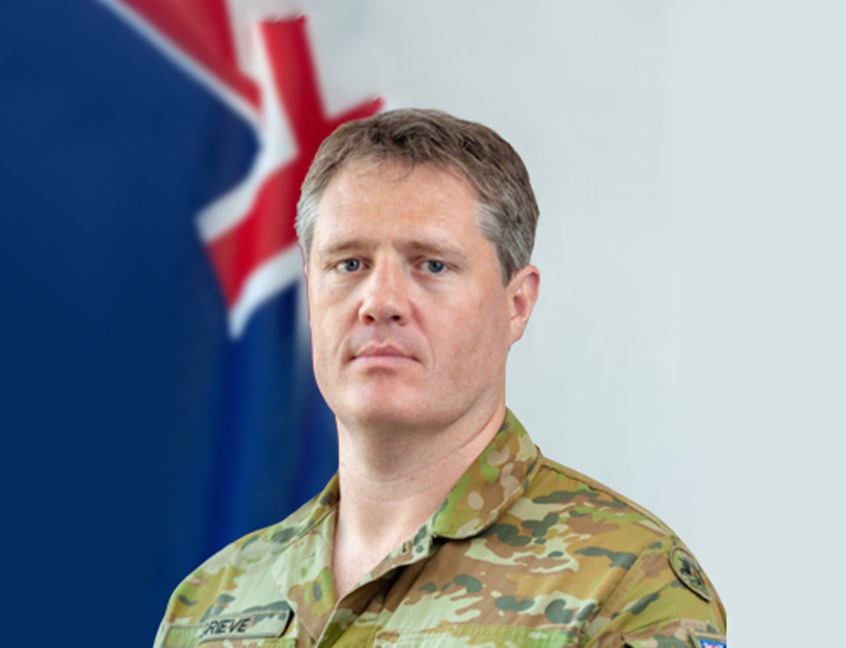
After more than 20 years serving as a Senior Medical Officer in the Australian Defence Force, Dr Andy Grieve has learned that leadership is rarely about titles. Today, as Medical Superintendent of Esk and Gatton Hospitals, he's responsible for leading a workforce of 35 doctors across 2 rural hospitals. Despite the operational complexity of the role, his focus remains surprisingly simple. ‘My primary role is to care for my team.’
It's a philosophy shaped by years in both Defence and healthcare. While the systems are different, Andy says the challenges are remarkably similar: complex organisations, competing priorities and workforces being stretched to their limits. ‘Physical exhaustion and decision fatigue are real,’ he says. ‘As leaders, we have a responsibility to advocate for better staffing, better rosters and more sustainable ways of working.’ It's a message that resonates strongly with rural generalists, many of whom find themselves stepping into leadership roles earlier than expected. ‘Often there isn't anyone else to do the job.’ His advice? Don't try to do it alone.
Andy credits much of his own development to mentors, peer networks and professional organisations such as ACRRM. ‘I'm regularly talking with colleagues about challenges, mistakes and lessons learned. Leadership can be lonely if you let it be.’ That focus on supporting colleagues extends well beyond the hospital walls.
As an ambassador for Trek2Health and through his work with Doctors' Health Queensland, Andy is helping tackle one of the profession's toughest issues: burnout.
The program uses a simple model. Get people out of the workplace, into nature and walking alongside others who understand. Through long hikes and informal conversations, participants are given the opportunity to unpack stress, trauma and the cumulative pressures that can build throughout a medical career. ‘The people who come are often high-performing individuals who simply want to fix themselves,’ Andy says. ‘Sometimes what they really need is connection.’
It's a cause he feels strongly about, having experienced his own mental health challenges through military deployments, clinical incident investigations and the everyday stresses of medicine. ‘As leaders, we need to create safe spaces where our colleagues can talk openly and confidentially.’ Perhaps the most enduring lesson from Andy's military and medical careers is one he believes every leader should embrace: ‘speak up for patient and staff safety.’
For Andy, leadership means advocating for patients, supporting staff and raising concerns when they need to be heard. Because ultimately, leadership isn't about being in charge. It's about having the courage to look after your people.