
Through our QRGP Rural Generalist Experience Bursary, Bond medical students, Sahaana and Siva, recently completed a one-week rural placement at St George Hospital. Offered in partnership with Bond University Society of Health for Indigenous and Rural Experience (BUSHFIRE) and St George Hospital, the bursary provides an opportunity to experience the breadth of rural medicine and rural life firsthand .
Reflections
Our adventure began before we arrived in St George, travelling from Brisbane on a small regional plane and taking in the incredible landscape of South West Queensland. On arrival, we were welcomed with airport transfers, comfortable on-site accommodation and introductions to the wider St George team, including Dr Adam Coltzau who encouraged us to not only observe, but to immerse ourselves in all kinds of opportunities during the placement.
Much of our time was spent in the Emergency Department, working alongside rural generalists, nurses and junior doctors. One message quickly became clear, one of the best ways to learn was to have a go. We were encouraged to see patients, take histories, examine them, formulate differentials and management plans, and then discuss our clinical reasoning with the team. Being involved helped build our confidence and challenged us to move beyond knowing clinical information to applying it to the patient in front of us.
Autonomy and supervision were particularly valuable. We were given the autonomy to assess our own patients, while knowing that support was always available when needed. This balance of independence and supervision challenged us to think more critically about our clinical decisions and strengthened our confidence in approaching unfamiliar presentations.
The breadth of presentations we encountered highlighted the versatility required of rural generalists. We were exposed to rural psychiatric presentations, eye concerns and dental problems – presentations we would not encounter to the same extent in our usual clinical environment. These experiences demonstrated how rural clinicians often need to manage health concerns that might otherwise be referred to more specialist services in metropolitan areas.
Our placement also provided insight into the complexities of rural healthcare. We both saw how distance, limited resources and limited access to specialist care can influence clinical decision-making.
Rural medicine involves more than managing the patient in front of you; it also requires an understanding of the broader healthcare system, resource limitations and how to advocate for patients when services are geographically distant.
One of the most significant lessons was the importance of understanding the patient’s circumstances. The team would often know patients by name and have a strong understanding of their medical history and personal circumstances, reflecting the close relationships rural clinicians develop with their community.
‘How far away did they live? What did they do for work? Could they easily return to the hospital if they deteriorated?’ For someone living or working on a property hours from town, a management plan that seemed straightforward on paper could look very different in practice.
This close connection between healthcare and community challenged our perception of rural medicine. Rural generalism can sometimes be described as doctors who ‘do a bit of everything’, but our experience demonstrated that it is a specialised field requiring a distinct and broad skill set. The rural generalists we worked with managed undifferentiated presentations across many areas of medicine, while knowing when additional specialist input or transfer was needed.
We valued the opportunity to learn from the clinicians around us. During quieter moments in ED, we spoke with rural generalists and nurses about their careers, the skills they had developed and what had drawn them to rural practice. These conversations offered practical insights into being adaptable and resourceful while working in an environment where patient presentations, available services and resources can vary considerably.
We also heard what they loved about living in South West Queensland and being part of the community they served.
The bursary experience helped us appreciate what rural placements offer. It’s more than clinical learning - immersing ourselves in the local community gave us a better understanding of the lifestyle, relationships and sense of connection that accompany rural practice.
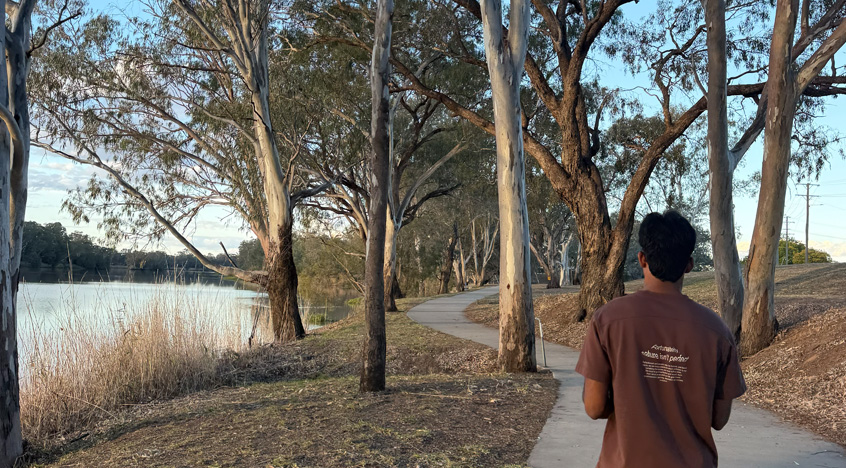
During our free time we explored St George, sampling local bakeries (including particularly memorable curry pies!), walking along the Balonne River, visiting local businesses and discovering some of the town’s unique attractions. This, and quiet evenings and sunset walks along the river provided a glimpse of a rural doctor’s life and work.
By the end of the week, we had developed greater clinical confidence and a deeper appreciation of rural generalism. We found that stepping into an unfamiliar environment and learning from clinicians who had built their careers in rural healthcare encouraged us to become more open-minded and independent.
We now have a much greater understanding of the breadth, responsibility and adaptability required of a rural generalist, as well as the privilege of becoming an integral part of a community.
Thank you to QRGP, BUSHFIRE, Dr Adam Coltzau and the St George Hospital team for providing us with such a valuable opportunity. Although this was our first time visiting, it most certainly won’t be our last.