
Education level
Job area
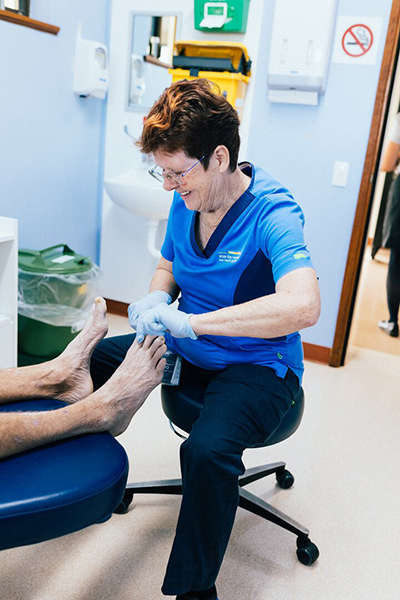
Your role as a podiatrist
You'll help keep people's feet and legs healthy if they have things like:
- diabetes, arthritis, circulation problems and other chronic conditions
- joint or bone problems and deformities, like bunions
- amputations or mobility problems
- muscle, tendon or soft tissue pain, like sprains or plantar fasciitis
- ingrown toenails, wounds, infections, corns and calluses.
You can also get extra qualifications to do foot surgery.
How a podiatrist is different to a prosthetist or orthotist
Podiatrists can assess, manage and treat any condition of the lower limb (feet and legs). Podiatrists can design and manufacture foot orthotics (like insoles) but not prosthetics (like making artificial legs).
Orthotists and prosthetists are experts in assessing deformities and lower limb mobility problems. They specialise in manufacturing customised prosthetics (like artificial legs, hands and arms).
What your day might look like
You could be working in a hospital, health clinic or private practice. You'll look after people of all ages. You can either work across a wide range of areas, or specialise in things like sports injuries, diabetes or older people.
You'll be doing things like:
- diabetic foot screening
- looking after wounds and dressings
- educating people about foot health and preventing foot problems
- checking nerve and circulation function
- assessing and diagnosing what's causing pain or dysfunction in the feet
- treating general foot complaints like ingrown toenails and fungal infections like athlete's foot
- helping prevent falls.
You'll work closely with other health professionals to treat patients and give expert diagnoses.
Read more about working as a podiatrist on Your Career.
Qualifications
Bachelor's degree in podiatry or podiatric medicine
You can get experience with us while you study for your degree. Find out more about our podiatrist trainee program.
Professional registration
Registration with the Podiatry Board of Australia via the Australian Health Practitioner Registration Agency (Ahpra)
Pay and benefits
Your pay rate and benefits will depend on your role and your pay point. In your first year as a qualified podiatrist you’ll start at health professional grade HP3, pay point 1. You’ll get a different rate if you’re in a higher level role.
We also offer:
- regular wage increases
- a superannuation rate of 12.75%
- a supportive workplace with flexible working arrangements
- several types of leave
- salary packaging.
If you're moving to start a new job with us, you may be able to get help with moving and travel costs.
Rural and remote opportunities
You may also be able to get financial incentives and other benefits if you work in rural and remote areas.
Read about our opportunities for rural allied health careers.
Professional growth
Continuing professional development (CPD) is an essential part of being a podiatrist. You'll have opportunities to build CPD points through things like:
- rural experience
- research
- access to education and training with the Clinical Skills Development Service and the Cunningham Centre.
Career paths
Doing more training after you become a podiatrist can lead to other roles such as:
- endorsed podiatrist to prescribe scheduled medicines
- surgical podiatrist
If you plan to do more study, ask your training provider if your past studies can count towards a higher qualification.