
Education level
Job area
Your role as an orthotist and prosthetist
As an orthotist or prosthetist, you’ll help people of all ages who need support with movement, staying independent and taking part in daily life.
This may include people recovering from illness or living with a disability or lifelong condition.
You'll do this by making and fitting devices that support or replace parts of the body.
This includes:
- prescribing, making and fitting orthoses (braces for limbs or the spine) and prostheses (artificial limbs)
- checking and adjusting devices as a person's needs change.
How a prosthetist or orthotist is different to a podiatrist
Orthotists and prosthetists are experts in assessing deformities and lower limb mobility problems. They specialise in manufacturing customised prosthetics (like artificial legs, hands and arms).
Podiatrists can assess, manage and treat any condition of the lower limb (feet and legs). Podiatrists can design and manufacture foot orthotics (like insoles) but not prosthetics (like making artificial legs).
What your day might look like
You’ll start your day by checking your schedule and setting up your workspace. You may review patient notes or get equipment ready for fittings or assessments.
Your day might include:
- meeting patients to check movement, strength or pain
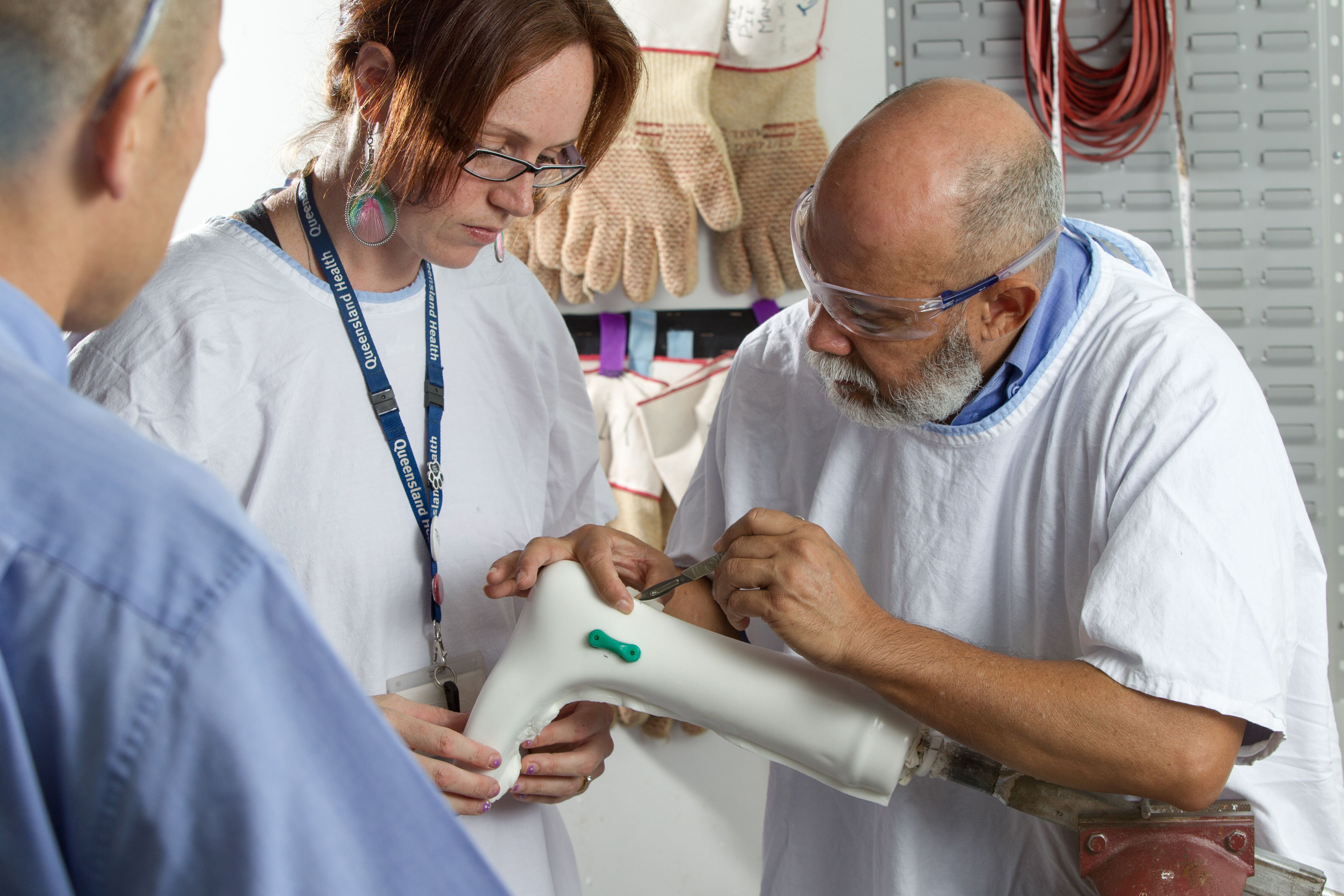
- taking measurements, plaster casts or digital scans
- making (manufacturing), changing and fitting devices to patients
- showing patients how to use and care for their devices.
You’ll work with doctors, nurses and other allied health professionals to support patient care.
Most of our roles are in hospitals, community settings or outpatient clinics but sometimes we also visit regional areas.
Read more about working as an orthotist and prosthetist on the Your Career website.
Qualifications
Bachelor’s degree in prosthetics and orthotics
We have a prosthetics and orthotics scholarship that may support your final year of study and help you find work after graduating.
Professional association
Accredited by the Australian Orthotic Prosthetics Association (AOPA)
Pay and benefits
In your first year you’ll start at health professional grade HP3, pay point 1. You’ll get a different rate if you’re in a higher level role.
We also offer:
- regular wage increases
- a superannuation rate of 12.75%
- a supportive workplace with flexible working arrangements
- several types of leave
- salary packaging
- help with ongoing professional development costs.
If you're moving to start a new job with us, you may be able to get help with moving and travel costs.
Professional growth
You’ll have access to learning and development during your career by:
- learning on the job
- training in specialist areas
- talking with experienced staff to build skills
- opportunities to study while you work
- taking part in research.
With experience and further training, you may move into more senior roles.
Career paths
Getting experience and doing more study when you’re an orthotist or prosthetist can lead to other roles.
- Senior orthotist or prosthetist
- Researcher
You can also specialise in:
- artificial limbs
- working with children (paediatrics)
- supporting people with brain or nerve conditions (neurological care)
- helping people recover after serious injury or illness (complex rehabilitation).