
Education level
Job area
Your role as an allied health assistant
As an allied health assistant, you’ll help allied health professionals give patients the care they need. You'll help them with their clinical work and other tasks that keep the service running smoothly.
Your role may involve:
- helping with patient screening and treatments
- helping patients understand their care plan and other services they can use
- keeping patient and clinical records up to date
- managing and restocking resources, supplies and equipment for the team.
As you get more experienced, you can move into an advanced role where you’ll also support and coach other allied health assistants.
We have full time, part time and casual roles, and you may work different shifts as part of a team.
Your working day
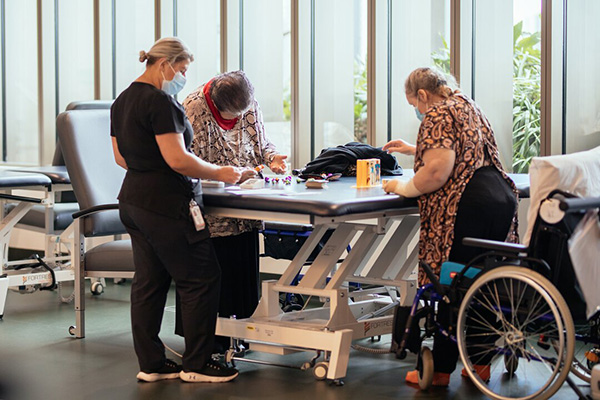
You’ll work with allied health professionals either in a hospital or in the community. Allied health professionals include audiologists, dietitians, physiotherapists, pharmacists, social workers, and many others. As an allied health assistant, you can either work in one speciality area, or across a few related teams.
An allied health professional will give you tasks and supervise your daily work. They’ll make all the decisions and let you know what each patient needs. Depending on the area you work in, you could be helping someone:
- learn to walk or talk again
- recover from an operation
- keep doing the things they love to do after an illness or injury.
Some days your work will be physical, helping patients with exercises or learning a task. Other days your work will be more desk based, updating records or ordering supplies.
Qualifications
You'll usually need a Certificate III or IV in Allied Health Assistance.
A Certificate IV in Allied Health Assistance is essential for our advanced roles.
Pay and benefits
Your pay rate and benefits will depend on your role and your pay point. In your first year you’ll start at a Queensland Health clinical assistant grade CA3, pay point 1 or CA4, pay point 1 for advanced roles.
We also offer:
- regular wage increases
- a higher superannuation rate of 12.75%
- a supportive workplace with flexible working arrangements
- several types of leave
- salary packaging.
Career paths
Being an allied health assistant can lead to work in a lot of different speciality areas. You can move from one to another, or you can do more training to become a health professional.
Learn more about student scholarships and programs to develop your career in allied health.
If you plan to do more study, ask your training provider if your past studies or work experience can count towards a higher qualification.