

Bond medical students, Georgia and Grace recently completed a week-long placement at St George Hospital through the QRGP rural generalist experience bursary. Offered in partnership with BUSHFIRE (Bond University Society of Health for Indigenous and Rural Experience) and St George Hospital, the bursary provides Bond medical students with financial support and accommodation for a rural placement.
Grace and Georgia both credit the placement as a unique opportunity to immerse themselves in rural medicine and life. Together, they engaged in ward rounds, procedural tasks, and multidisciplinary teamwork. Their experiences highlighted the challenges faced in rural medicine – geographic isolation, limited resources, and delayed presentations – but also the rewards of servicing a rural community.

‘I had the opportunity to hear directly from the doctors about their lives and work - how they staff the emergency department and complete ward rounds in the hospital while also serving as the community’s GPs, taking turns being on call, and travelling for outreach to smaller surrounding communities. Each rural generalist doctor had advanced skills in different areas, creating a team with a broad and varied scope of practice. It was inspiring to see how they brought these unique skills together to meet the needs of the community. This really showed me how rural generalism allows for so many opportunities,’ Grace said.
The diversity of the experience also made an impact on Georgia. ‘Being away from metropolitan resources required me to think critically, anticipate potential complications, and value clinical reasoning skills over reliance on investigations. I also grew more confident in initiating patient interactions, taking histories, and presenting cases to supervising doctors.’
Beyond clinical experiences, the placement also provided personal lessons both students will carry with them. ‘One evening, a local doctor invited us and other visiting students to her home for dinner. Sitting around a fire, sharing stories from our time in medical school and our short stay in St George, I felt part of a family. That evening captured the strong sense of connection that exists in rural practice, where professional and personal relationships overlap to create a supportive, close-knit community – one we hear about but to experience this for yourself is very different!’ Grace said.
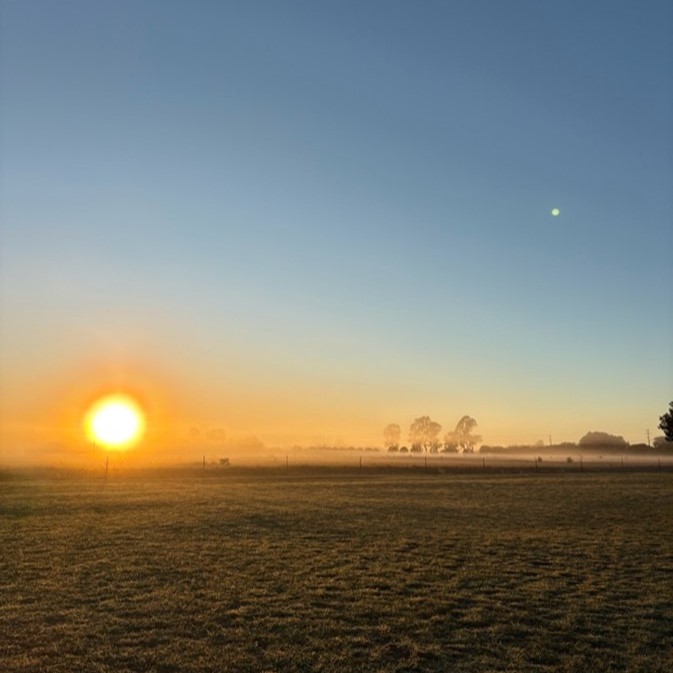
Georgia experienced rural resourcefulness firsthand when she accompanied an ambulance for a patient transfer at a remote property. With limited phone reception and mixed directions, it was an adventure! ‘We had to go through multiple paddocks, pass many cows, and go through about 15 gates, all with different latches! It showed me how resilient you have to be to live on the land. The phone service is limited, the nearest supermarket is not just around the corner, and you may have to go back to an old school map! It broadened my perspective of medicine beyond the hospital. Engaging with patients in a smaller town allowed me to appreciate the doctor-patient relationship as one built not only on clinical expertise, but also on trust, continuity, and community involvement.’
Both Georgia and Grace left with a greater appreciation for the vital role rural generalists play and the many opportunities this path offers. ‘The placement was an invaluable opportunity to consolidate clinical skills while experiencing the realities of rural medicine in Queensland. It not only improved my practical competence but also deepened my appreciation of the challenges and rewards of working in a rural setting’ Georgia reflected.

For Grace, ‘The placement showed me that a career in rural generalism does not limit your scope of practice, but in fact, expands it, allowing you to integrate different areas of medicine into a role that truly makes a difference. I found myself developing my communication skills further when working with patients, particularly those facing challenges less common in city settings. This shaped not only the clinical presentations I observed, but also highlighted the importance of empathy, adaptability and problem-solving when delivering care in a rural setting’.
Grace and Georgia extend their gratitude to QRGP, BUSHFIRE and the wonderful team at St George for providing this experience. They also encourage medical students to consider rural placements to broaden clinical skills, strengthen understanding of rural medicine, and contribute to personal and professional development.