
Education level
Job area
Your role as a trades assistant
As a trades assistant, you’ll help to keep our hospitals, health centres and industrial laundries in good condition.
This includes:
- doing general repairs and maintenance
- helping qualified tradespeople with work on new or existing buildings
- setting up work areas and making sure they’re tidy and safe.
We have full time, part time and casual roles, and you may work shifts or be on call.
How a trades assistant is different from a tradesperson
Trades assistants help with a range of jobs. A tradesperson has a trade qualification, and works in a specific area such as building, plumbing, painting, air conditioning, mechanical or electrical work.
What your day might look like
Most trades assistants work in our hospitals and health clinics, but you might also look after our:
- aged care homes
- central office buildings
- pathology labs and mortuaries
- research and storage facilities
- automated industrial laundries.
You’ll start the day by checking in with your team to find out what needs doing and learn about any risks or safety hazards.
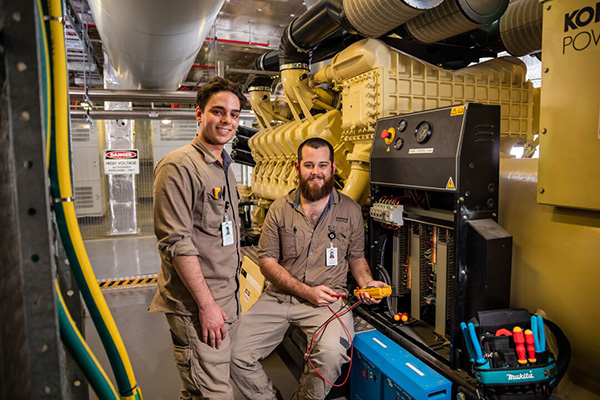
You’ll use your tools and equipment to do a range of general maintenance jobs, including:
- replacing light bulbs
- installing shelves, handrails and privacy curtains
- patching walls or touching up paint
- replacing tap washers, fixing minor leaks
- clearing blocked sinks or drains
- putting up signage or notice boards
- assembling and repairing furniture
- cleaning and maintaining industrial equipment.
If you’re working on a bigger project, like an upgrade or new build, you might also be:
- clearing out the work site and moving furniture, fittings and equipment
- measuring and cutting materials like wood or plasterboard
- setting up barriers, signage and safe work zones
- laying out drop sheets to protect walls and floors.
You’ll support qualified tradespeople like electricians, plumbers, carpenters, painters, air conditioning technicians and maintenance fitters. You might help them by fetching tools, preparing materials or holding items while they install or repair them.
A big part of your job is keeping work areas and walkways clean and safe. After each job, you’ll remove rubbish, store your tools and materials away, and make sure the area is ready for use.
Qualifications
You don’t need a qualification, but it can help you build the skills you need to succeed. Some jobs might ask for several months of structured training through a registered training organisation.
Professional licences
You must have a Queensland driver licence (C class) if you need to drive as part of your job.
You might need a licence to do certain types of work, such as:
- construction or demolition
- putting up or taking down scaffolding
- using a forklift, crane or hoist
- working on lifts, escalators or pressure equipment
- driving large machinery on the road.
Learn more about workplace licences on the WorkSafe website.
Pay and benefits
Your pay rate and benefits will depend on your role and your pay point. In your first year you’ll start at health, building, engineering and maintenance officer grade 10.
We also offer:
- regular wage increases
- a superannuation rate of 12.75%
- a supportive workplace with flexible working arrangements
- several types of leave
- salary packaging
- help with training costs.
If you're moving to start a new job with us, you may be able to get help with moving and travel costs.
Career paths
Getting experience as a trades assistant or getting a trade qualification can lead to other roles.
- Maintenance fitter
- Maintenance manager
- Plumber
- Electrician
- Heating, ventilation and air conditioning technician (HVAC)
You may be able to do an apprenticeship or traineeship with us.