
Education level
Job area
Your role as a pathology specimen collector or phlebotomist
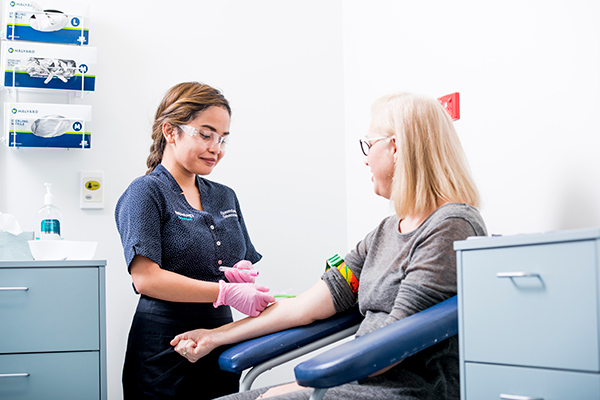
As a pathology specimen collector or a phlebotomist, you’ll collect blood samples from patients and prepare them for testing.
This includes:
- taking blood samples from a vein (venepuncture)
- labelling and handling samples
- preparing samples for transport to laboratories
- following safety and infection control procedures.
We have full time, part time and casual roles, and some include shift work.
How a pathology specimen collector is different from laboratory roles
Specimen collectors don’t test or analyse samples. They collect and prepare samples so laboratory staff can do the testing.
Laboratory roles, such as clinical assistants and medical scientists, work in laboratories to prepare, process and test samples.
What your day might look like
You’ll start your shift by preparing equipment and checking collection requests.
During the day, you’ll collect blood from patients in hospitals, clinics or collection centres. You’ll confirm patient details and explain the procedure to patients.
After collection, you’ll label samples and prepare them for transport to a laboratory. You’ll follow safety and infection control procedures and do basic paperwork or enter information into electronic records.
You’ll work as part of a pathology team and follow instructions from laboratory and clinical staff.
Read more about a pathology specimen collector on the Your Career site.
Qualifications
You can usually work as a pathology specimen collector without formal qualifications.
A Certificate III or IV in Pathology Specimen Collection is helpful but not essential.
Pay and benefits
Your pay rate and benefits will depend on your role and your pay point. In your first year you’ll start as a clinical assistant CA3, pay point 1.
We also offer:
- regular wage increases
- a superannuation rate of 12.75%
- a supportive workplace with flexible working arrangements
- several types of leave
- salary packaging
- help with ongoing professional development costs.
If you're moving to start a new job with us, you may be able to get help with moving and travel costs.
Rural and remote opportunities
You may be able to get extra benefits if you work in rural and remote areas.
In these areas, you may work in a wider range of settings, including central specimen reception, and support local health care teams.
Read about our rural and remote opportunities.
Professional growth
You’ll have access to learning and development throughout your career.
This may include:
- learning on the job
- opportunities to study while you work.
With experience and further study, you may move into other pathology or health roles.
Career paths
Working as a pathology specimen collector can lead to other roles.
- Clinical Assistant Supervisor
- Clinical Assistant Manager
- Clinical Assistant Trainer
If you plan to do more study, ask your training provider if your past studies can count towards a higher qualification.