
Education level
Job area
Your role as a health information manager
As a health information manager (HIM), you’ll look after patient health records and make sure our systems support quality care.
This includes:
- making sure patient records are secure and correct
- analysing data for trends that help us learn about and improve health care
- improving information systems, health technology and data quality
- following laws and ethical practices that support privacy and access to information.
In some roles, you might lead a team of clinical coders who assign medical codes to information and events in patient health records.
We have full time, part time and casual roles.
How a health information manager is different to a clinical coder
A health information manager has more responsibility than a clinical coder. They oversee our information systems and make sure we collect, store, protect and use health data correctly. To become a health information manager, you need a university degree.
What your day might look like
Many of our health information managers work in hospitals and health centres across Queensland.
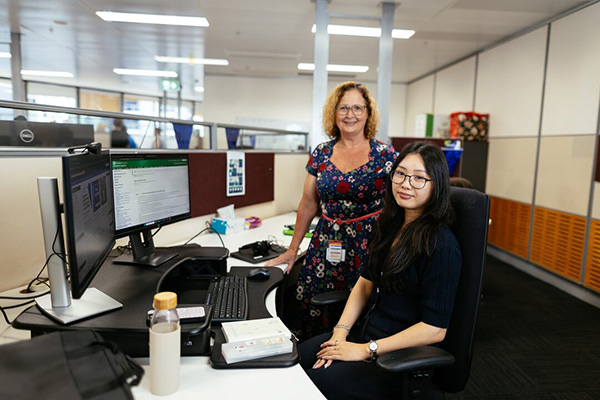
If you support clinical coding, you’ll check in with your team, review data quality and assign any new jobs. You’ll respond to requests for information or advice, and work with groups across our health services to improve our standards, systems and processes.
You'll also work on projects, like improving digital systems or updating policies.
In some roles, you might work in a central office or travel to rural and remote areas. We also have roles in different settings like research, IT, digital health and quality assurance.
Read more about working as a health information manager on the Your Career website.
Qualifications
You'll have one of the following.
- Bachelor’s degree in health information management
- Master’s degree in health information management
Pay and benefits
Your pay rate and benefits will depend on your role and your pay point. In your first year, you’ll start at professional stream grade 3, pay point 1. You'll get a different rate if you're a student.
We also offer:
- regular wage increases
- a superannuation rate of 12.75%
- a supportive workplace with flexible working arrangements
- several types of leave
- salary packaging
- help with the cost of continuing professional development.
If you're moving to start a new job with us, you may be able to get help with moving and travel costs.
Professional growth
You’ll develop your professional skills through:
- orientation programs for new staff
- workplace learning and coaching
- self-directed learning
- professional development and upskilling opportunities.
Career paths
Getting experience as a health information manager or doing more training can lead to work in other roles.
- Coding coordinator
- Medical records custodian
- Data quality manager
- Data analyst
- Information access manager
- Health information operations manager
If you plan to do more study, ask your training provider if your past studies can count towards a higher qualification.