
Education level
Job area
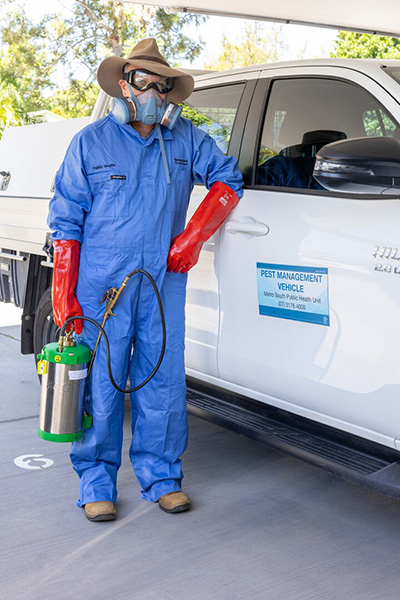
Your role as an environmental health technician
As an environmental health technician, you’ll help us make sure that places where people work, live and play are safe and healthy.
This includes:
- routine checks and testing of public places and services
- reporting and dealing with public health risks
- keeping compliance records.
Environmental health technicians spend a lot of time outdoors and move between locations through the day.
We have full time, part time and casual roles.
How an environmental health technician is different from an environmental health officer
Environmental health technicians support environmental health officers by helping with sampling, monitoring and inspections. An environmental health officer has a university degree and more responsibility.
What your day might look like
Environmental health technicians do a mix of field and office work. You might start your day checking in with your team, maintaining equipment and writing basic reports.
You’ll help with inspections, and collect samples of air, water, food, soil and waste from places like:
- food shops
- tattoo shops
- drinking water and wastewater systems
- swimming pools and beaches.
A big part of your job is keeping people safe from illness and disease from unsafe food, contaminated water, pests, pollution and poor housing conditions. You’ll report public health risks and help control them.
You’ll also help with enforcing laws about medicine, poisons, tobacco and vapes, and food and radiation safety. If someone breaks the law, you’ll gather evidence so we can issue warnings or fines.
We also have roles in First Nations and rural and remote communities.
Qualifications
You’ll have one of the following qualifications, but you may not need one for an entry level role.
- Certificate II in Sampling and Measurement
- Certificate III in Laboratory Skills
- Certificate III in Indigenous Environmental Health
- Certificate IV in Indigenous Environmental Health
- Certificate IV in Laboratory Techniques
- Certificate IV in Environmental Monitoring and Technology
- Diploma in Environmental Health
- Diploma of Laboratory Technology
Pay and benefits
Your pay rate and benefits will depend on your role and your pay point. In your first year you’ll start at operational grade 3, pay point 1. You’ll get a different rate if you’re a student or in an entry level role.
We also offer:
- regular wage increases
- a superannuation rate of 12.75%
- a supportive workplace with flexible working arrangements
- several types of leave
- salary packaging
- help with training costs.
If you're moving to start a new job with us, you may be able to get help with moving and travel costs.
Professional growth
You’ll develop your professional skills through:
- orientation programs for new staff
- workplace learning and coaching
- self-directed learning
- professional development and upskilling opportunities.
Career paths
Getting experience as an environmental health technician or doing more study can lead to other roles.
- Environmental health officer
- Environmental health scientist
- Policy officer
If you plan to do more study, ask your training provider if your past studies can count towards a higher qualification.