
Education level
Job area
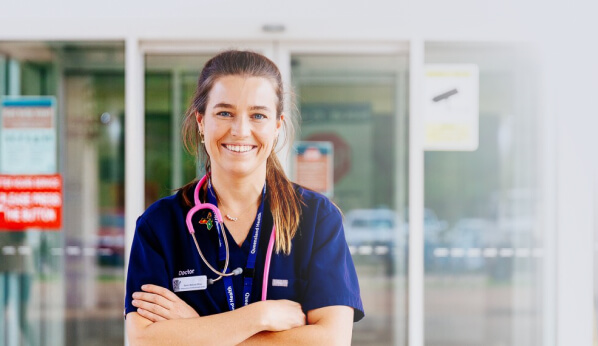
Your role as a doctor
As a doctor, you'll care for patients in hospitals, clinics and in the community. You’ll diagnose and treat illness, manage injuries and long term conditions.
You’ll work with patients of all ages and backgrounds, in a range of different settings from busy metropolitan hospitals to regional and rural services.
You may work in a range of specialties, including:
- general practice (GP) – providing general health care in clinics and communities
- emergency medicine – working in hospital emergency departments
- surgery – specialising in areas such as general, orthopaedic, cardiac, or plastic surgery
- paediatrics – caring for infants, children and young people
- obstetrics and gynaecology – focusing on pregnancy, childbirth and women’s health
- anaesthetics – providing anaesthesia and pain management in surgery and procedures
- mental health and psychiatry – treating mental health conditions and supporting patient wellbeing
- medical imaging or radiology – diagnosing diseases using imaging technologies
- pathology – analysing samples to diagnose diseases
- rural and remote medicine – providing care in regional or isolated communities
- academic or research medicine – teaching, doing research, or working in medical education
Learn more about each speciality and their training requirements.
What your day might look like
Your day will depend on your role and specialty, but may include:
- seeing patients in wards, clinics or emergency departments
- assessing symptoms and deciding on next steps for care
- ordering and reviewing tests and scans
- treating illness or injury and monitoring recovery
- talking with patients and families about diagnoses and treatment options
- working with nurses, allied health staff and other doctors
- writing notes, referrals and discharge plans
You may move between different areas during the day or be on call and responding to urgent patient needs. You’ll balance clinical work with patient care.
We have full time, part time and casual roles, and you may work different shifts.
Qualifications
You need to have an undergraduate degree followed by a postgraduate Doctor of Medicine (MD), or a Bachelor of Medicine, Bachelor of Surgery (MBBS).
Professional registration
All doctors must be registered with the Medical Board of Australia (MBA). The type of registration depends on your experience, qualifications and training.
Pay and benefits
We pay our interns more than most other states and territories. In your first year you’ll start at medical officer Level 1 (MO1). You’ll get a different rate if you’re in a higher level role.
We also offer:
- regular wage increases
- a superannuation rate of 12.75%
- a supportive workplace with flexible working arrangements
- several types of leave
- salary packaging
- help with ongoing professional development costs.
If you're moving to start a new job with us, you may be able to get help with moving and travel costs.
Rural and remote opportunities
We offer training, development and support for medical professionals who would like to work in rural and remote locations.
Professional growth
We offer 2 different internships each year for medical graduates. Our interns work in hospitals and rotate through different clinical areas and build the skills they need for general medical registration.
Career paths
We offer a range of career paths. You'll start as a post graduate intern, with the following 3 or 4 years working as a resident medical officer in junior house officer and senior house officer roles. You can then apply for registrar training in an accredited course of study leading to a specialist qualification.