
Dr Ryan Agnew is a senior medical officer, rural generalist and retrieval specialist with an advanced skill in anaesthetics. Ryan works on Thursday Island (Waiben Country) in the Torres Strait.
Growing up in rural South Australia, Ryan’s experiences in small communities shaped his understanding of the vital role rural generalists play in providing comprehensive healthcare. From an early age, he was inspired by the deep connections between healthcare providers and their communities, and the adaptability required to meet diverse medical needs with limited resources. These formative years instilled the foundational pillars of Ryan’s medical career - responsibility, resilience, empathy, and resourcefulness.
Ryan’s medical education was influenced by Dr Richard McKinnon and his advocacy for the multifaceted nature of rural practice. Dr McKinnon’s guidance not only honed Ryan’s clinical skills but also reinforced the importance of cultural sensitivity, continuity of care, and interprofessional collaboration.
 ‘In my first week (with Dr McKinnon) we saw a patient in his private practice and took out the appendix of this person in theatre later that night! So, it was one of those really beautiful rural generalist experiences that shaped the early stages of my uni days.’
Ryan moved to Cairns for his Queensland Rural Generalist Pathway internship and the opportunity to broaden his expertise beyond general practice. He pursued advanced skills in anaesthetics and retrieval medicine, recognising that in remote areas, clinicians often need to perform across a broad range of disciplines. This cross-training has been invaluable in his current role, allowing him to provide comprehensive care in both acute and primary care settings.
Ryan was also influenced by Dr David Mills, a rural generalist who worked in Papua New Guinea for 20 years, who shared his experience and learnings with Ryan. ‘I've maintained a connection with Dave Mills and PNG over the years. I've travelled to PNG through medical school and after graduating. The Torres Strait communities have such a close connection with the PNG people. It made sense when I was in Cairns to try and come up to Thursday Island on a PGY2 rotation and I loved it.’
For several years, Ryan has worked in the Torres Strait across both hospital and primary care environments. He also coordinates patient retrievals and critical care transfers, often under difficult conditions with limited resources and logistical challenges. This experience deepened his appreciation for the unique healthcare needs of Indigenous and remote island communities. He understands that effective healthcare delivery in these contexts requires cultural competence, respect, and a collaborative approach with local health workers and community members at the forefront.
At the core of Ryan’s medical philosophy is a commitment to holistic, patient-centred care. He believes that effective healthcare extends beyond treating immediate medical issues; it involves addressing social determinants of health, fostering strong community relationships, and supporting long-term wellbeing. He values building relationships with patients and their families, understanding that trust and familiarity are essential. Ryan emphasises the importance of multidisciplinary teamwork, regularly collaborating with allied health professionals, nurses, and local Indigenous health workers.
‘Thursday Island is an amazing place to work because I want to be collegial, I want to work in primary care, and our primary care doctors talk to our hospital. We use the same medical record system and have really good oversight of what’s going on in TI, in Bamaga, in the hospital, and the outer islands. This extends to the wider medical community, our allied health professionals, our physiotherapists, our pharmacists – we’re all so well connected and discuss things daily.’
The diversity of care is a big drawcard for Ryan, ‘One day you're retrieving, one day you're in primary care, either on TI or at an outer island. Just last week I was seeing patients as a primary care doctor, and then I ended up having to retrieve one of them on the weekend that I worked. They were a patient I knew pretty well. I knew the patient’s medical history and their family and that was so rewarding for me.’
Ryan embraces the full scope of practice as a rural generalist. He thrives in settings where the lines between primary care, emergency medicine, and retrieval overlap, finding fulfillment in the variety and complexity of cases.
‘One of my career highlights was when I was doing my GP Reg years up here a couple years ago. I was the doctor at Yam Island, and I really enjoyed being a regular doctor in a small community and getting to know the community really well and feeling like I helped them in their health journey. Then I returned a couple of years later and I still had a good rapport with the people and was able to pick up where I left off. It was a very special experience for me.’
Beyond his professional commitments, Ryan is passionate about maintaining a healthy lifestyle, using his time on the island to train for triathlons. ‘I train by running a few laps around the entire island and swimming in the 50m pool. It’s the perfect training environment with the added challenge of humidity!’ He also enjoys engaging with the local community, promoting health awareness and leaning into hobbies. ‘You have more time to do the things you want to explore – exercise, craft, pickling, making cheesecakes, gardening or catching up with friends’.
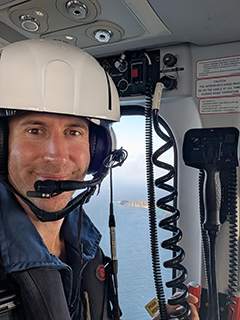
Ryan credits the strong workplace culture, lifestyle and variety of work as what keeps him in place. ‘The culture on TI is so strong and the average length of doctor stay here is moving up to 5-6 years. It’s pretty hard to think about working anywhere else just because we have it so good. I’m living in a beautiful place. I look out to the ocean every single morning and get to fly in helicopters. The community is very receptive to healthcare and respectful of health services. We get some fascinating cases that come through – stuff that you wouldn’t see anywhere else’.
As healthcare continues to evolve, Ryan is committed to adapting and advancing medicine in a rural and remote context so rural communities have equitable access to high-quality healthcare, supported by strong networks of local and visiting health professionals. He advocates for continued investment in rural medical education, mentorship, and infrastructure. He is passionate about ongoing professional development and looks forward to contributing to training programs that support the next generation of rural practitioners.
Ryan’s advice for anyone considering working in a rural and remote location: ‘I think everyone in medicine should experience rural and remote medicine at least once. My recommendation for junior doctors is to have an open mind and give rural sites a go and just enjoy the experience. Even if you're thinking about subspecialty training or some other training, going rural can help you understand what it's like for a patient from Murray Island to be transferred to Cairns, or further away, and how that’s a big deal, or when a whole family gets retrieved. It’s important to understand what it's like for that patient, and their family to be so far away from home, where family and structure is such an important part of day to day life.’